A new semester, a new concert, and leaving the room

There is always something slightly strange about the first week of a new semester. The corridors at the HfMT suddenly fill up again, people appear carrying instruments and coffee, rooms that have been empty for weeks are booked solid, and everyone is trying to remember where they left off before the summer.

This year, for me, the beginning of the semester feels particularly significant.

The winter semester at the Hochschule für Musik und Tanz Köln starts on October 5. The following evening, on October 6, I will play my Antrittskonzert as Junior Professor for Interpretation of New Music. And less than 48 hours later, I’ll be in Münster with Nadar Ensemble for Don’t Leave the Room.

So there isn’t exactly going to be a gentle return to work.

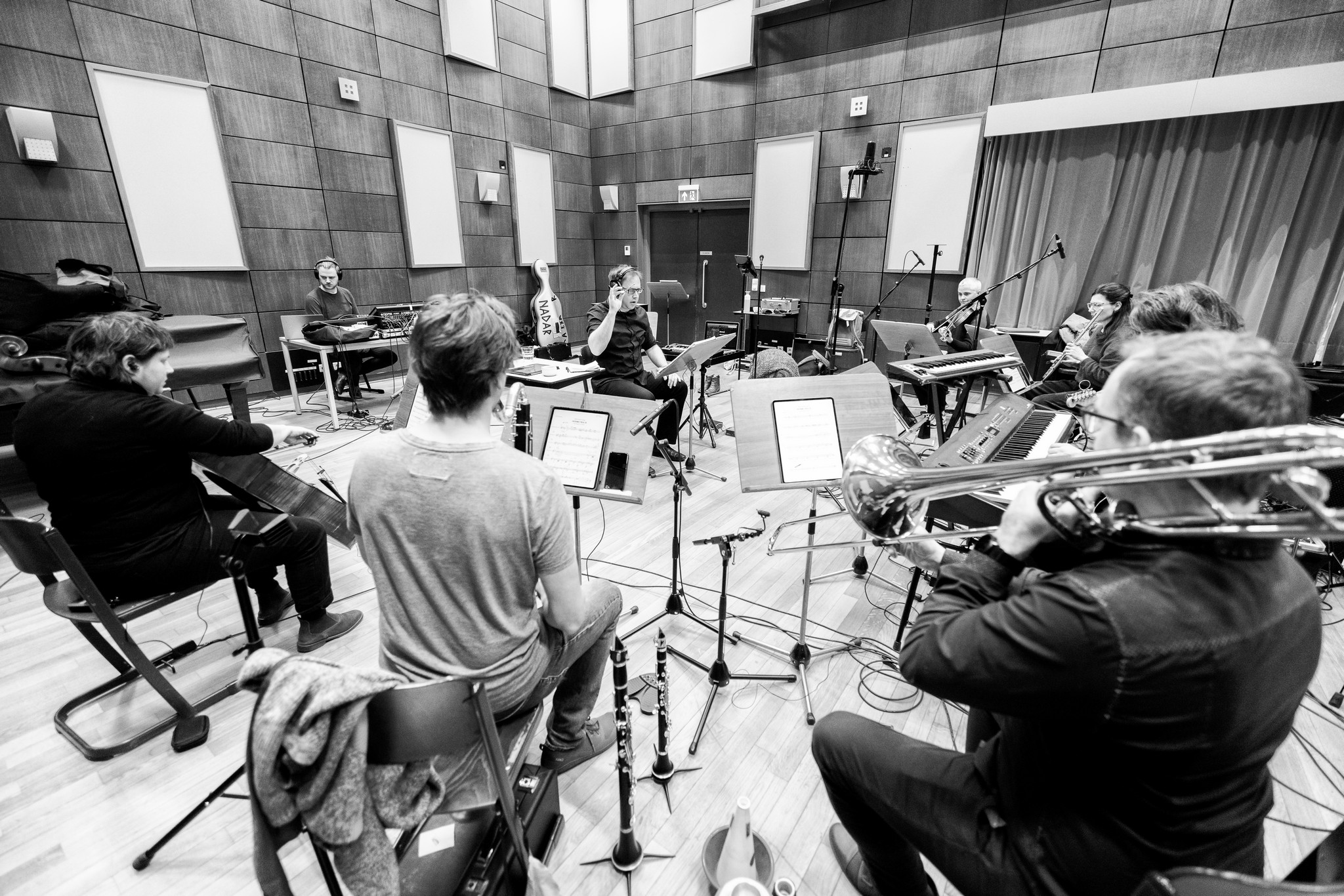
One of the things I enjoy most about working at the HfMT is that the teaching is never really separate from the artistic work. The questions that come up in rehearsals—how we work with electronics and video, how performers take on different roles, and how we rehearse music that doesn’t behave like traditional repertoire—also find their way into the classroom.

And before all of that gets properly underway, there is the small matter of standing on stage myself.

(c) Pieter Matthynssens

And I am on stage again

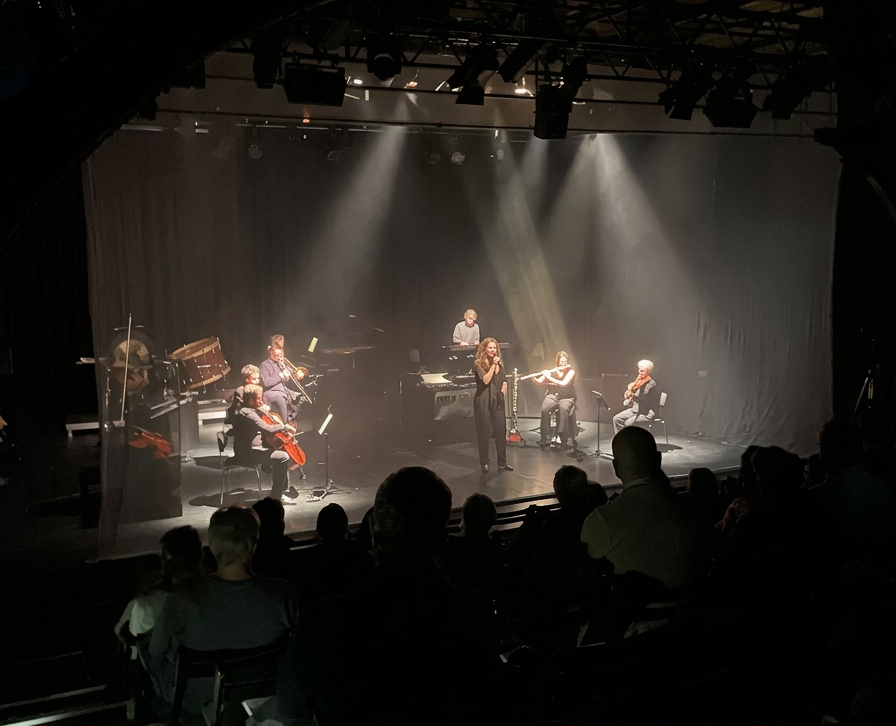
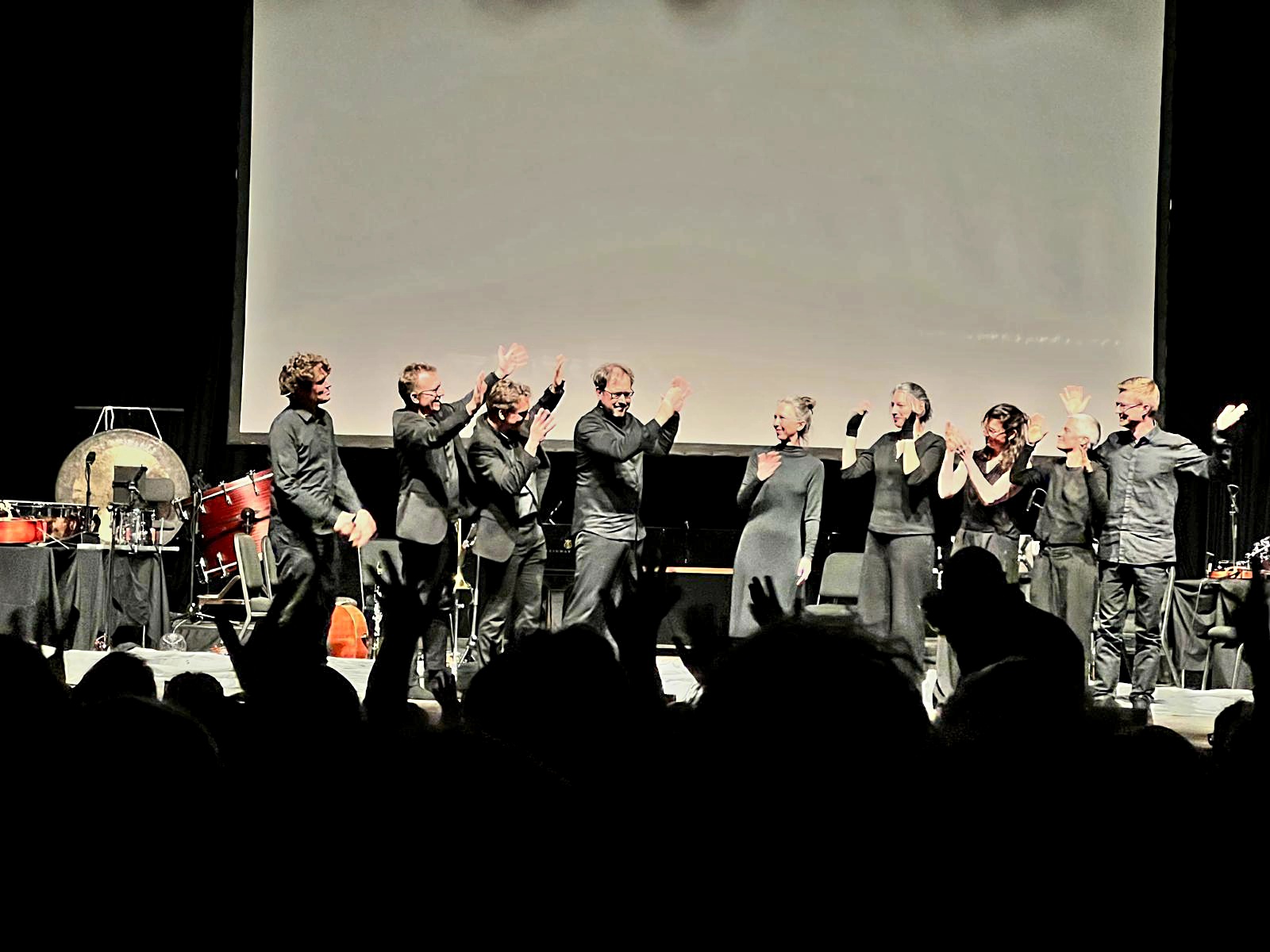
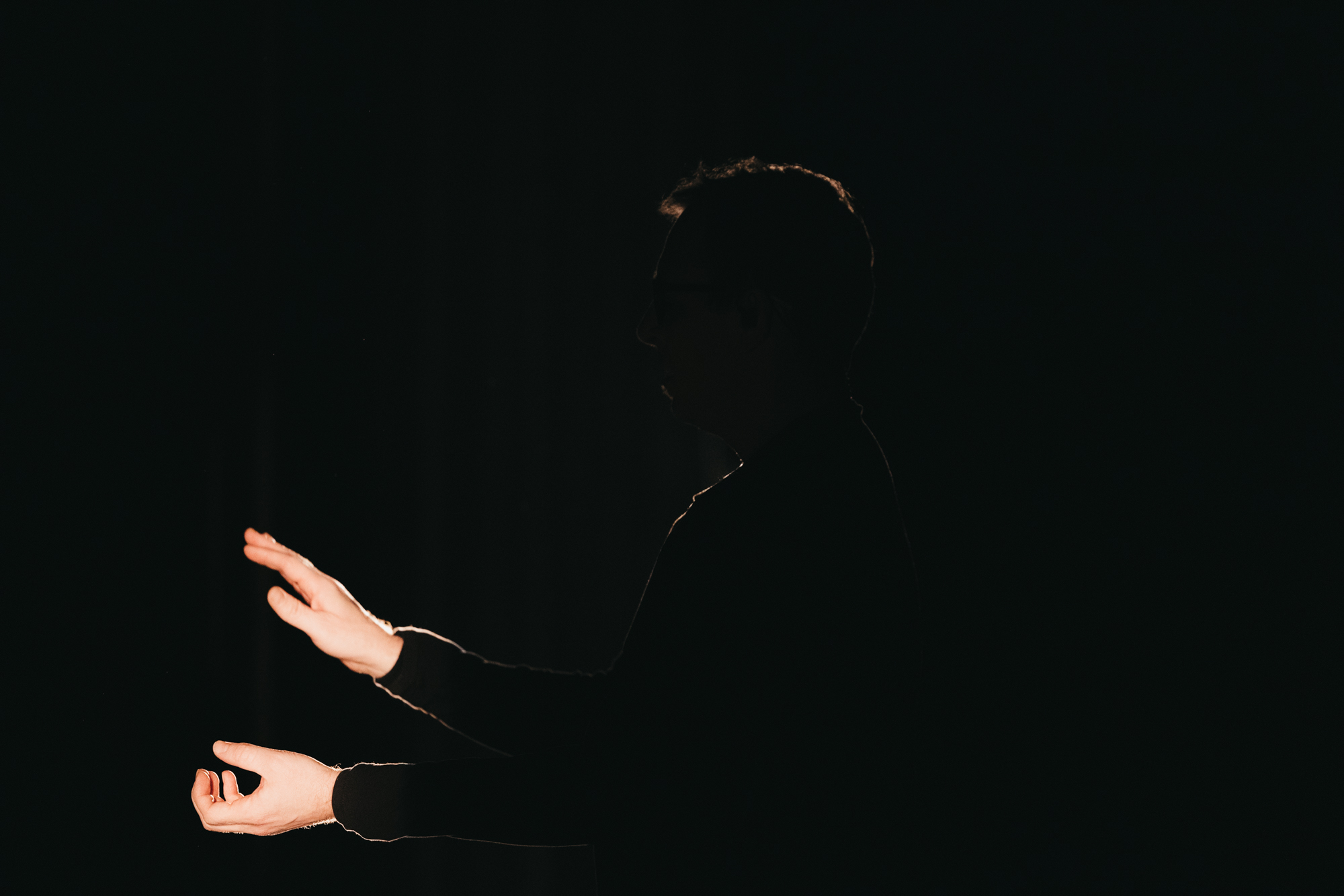
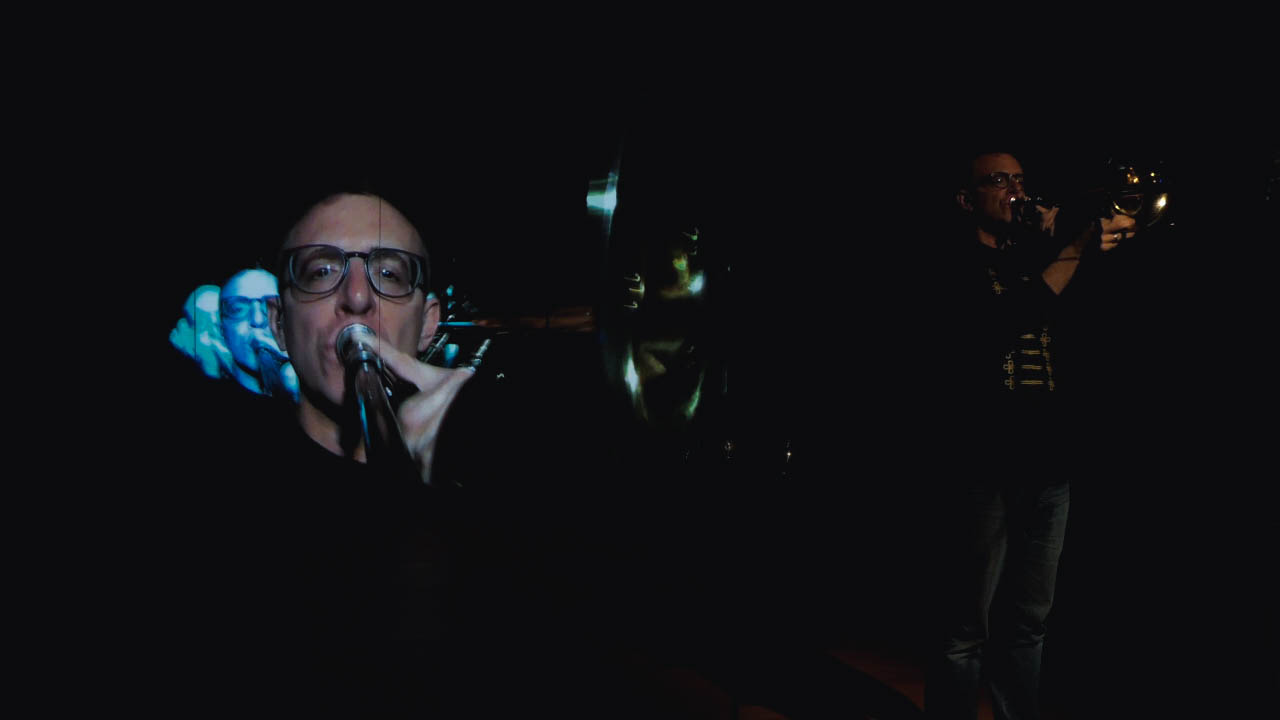
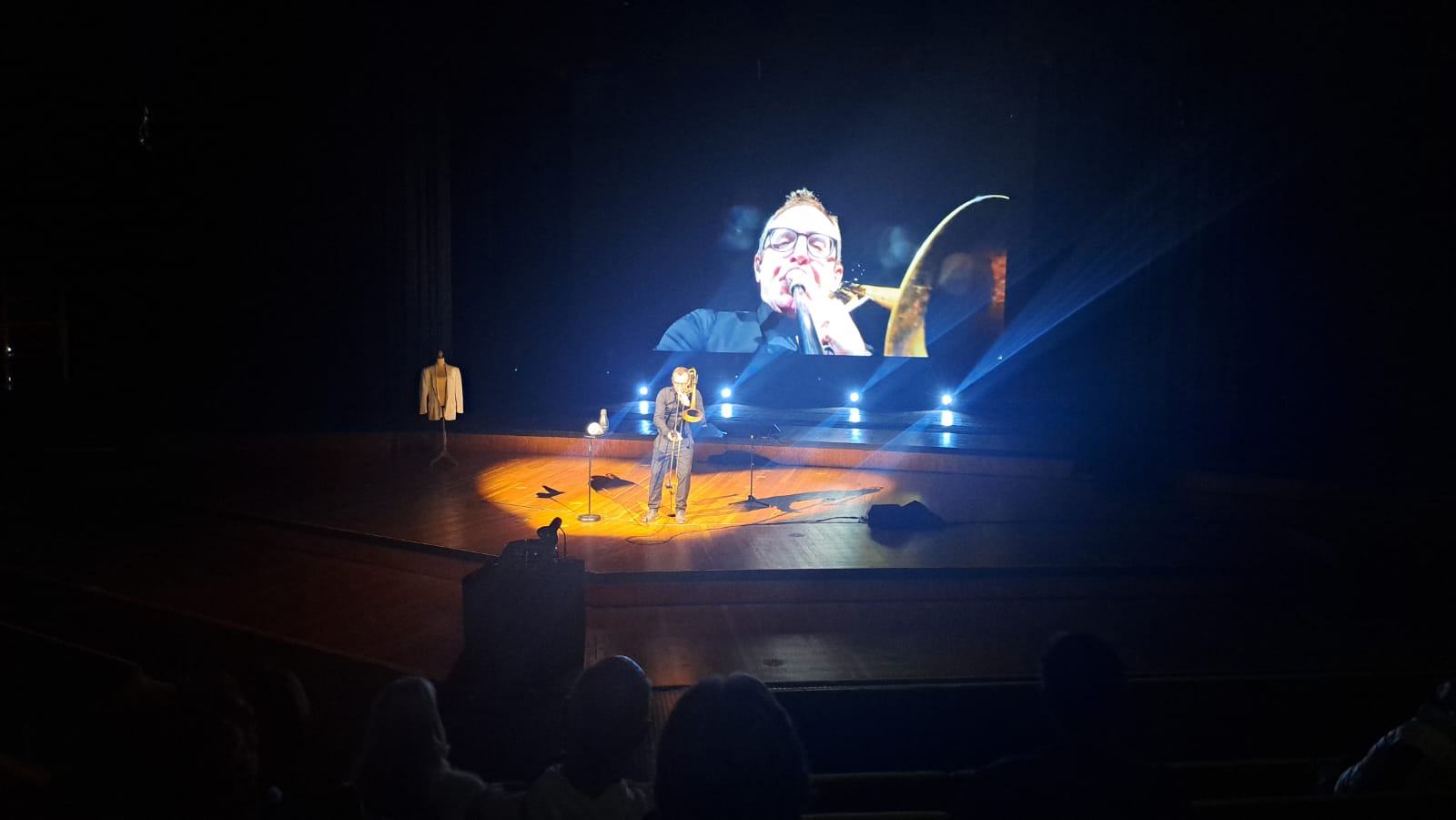
My Antrittskonzert is part of the HfMT’s Spitzentöne series. The program brings together Jessie Marino’s Ritual, Piotr Peszat’s And I am standing on stage again, and Thierry De Mey’s Light Music.

It is not exactly a conventional trombone recital.

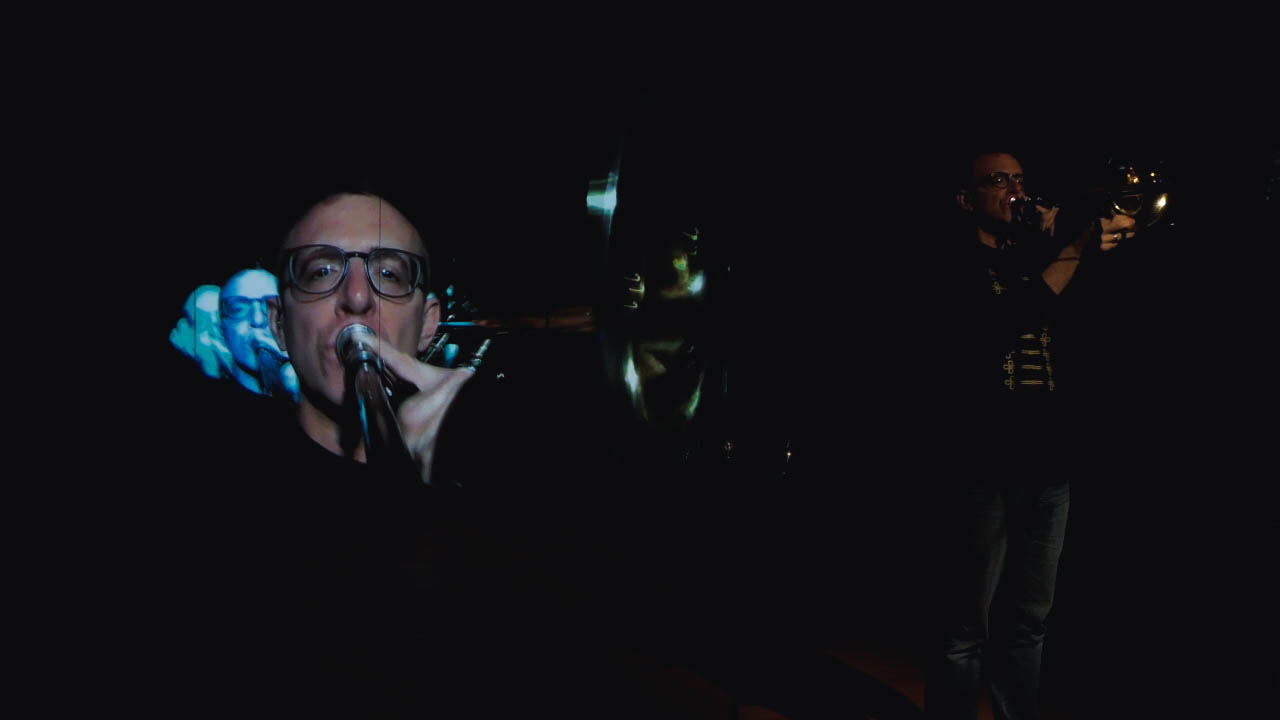
In Peszat’s piece, for example, I work with live video and electronics alongside the trombone. Wannes Gonnissen is responsible for the sound, and Piotr is involved with the electronics. The technology isn’t decoration around the music—it is part of the performance itself.

That is also a good description of much of the work I want to develop at the HfMT: not just asking how we perform contemporary music, but what a performer can be when the traditional boundaries between instrument, musician, and concert start to become less clear.

And perhaps appropriately for an Antrittskonzert, the title And I am standing on stage again feels slightly autobiographical. After all the rehearsals, meetings, teaching, administration, and emails that come with starting a new job, there is something wonderfully straightforward about eventually just having to walk onto the stage and play.

(c) Wim Hierbaut

Then we leave the room

The following Thursday, I will be doing almost the opposite.

With Nadar Ensemble, we are performing Don’t Leave the Room at Theater im Pumpenhaus in Münster. It is the German premiere of the production.

The starting point is Joseph Brodsky’s poem Don’t Leave the Room, written in 1969—a partly ironic, partly threatening invitation to stay inside, shut the door, and avoid the outside world.

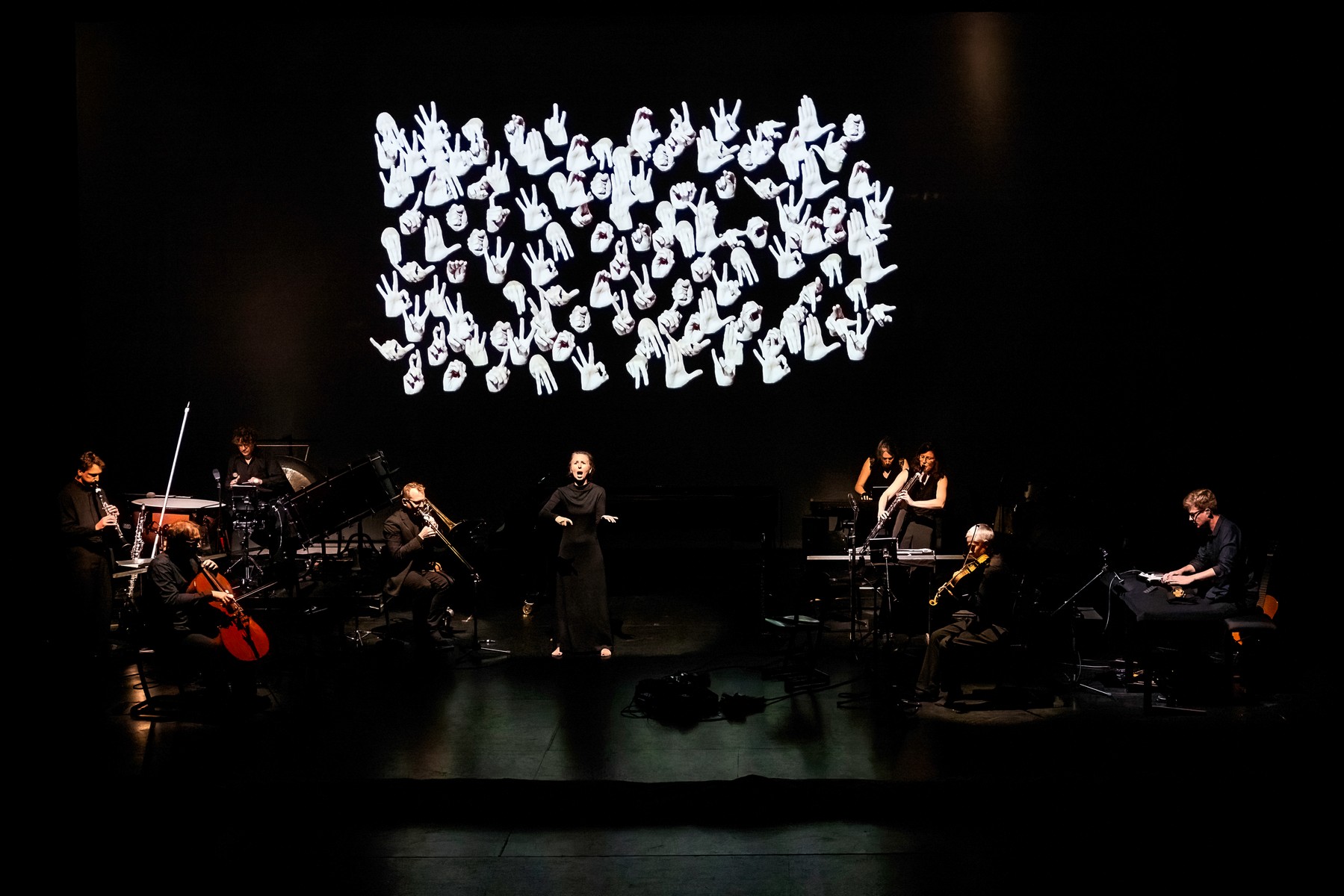
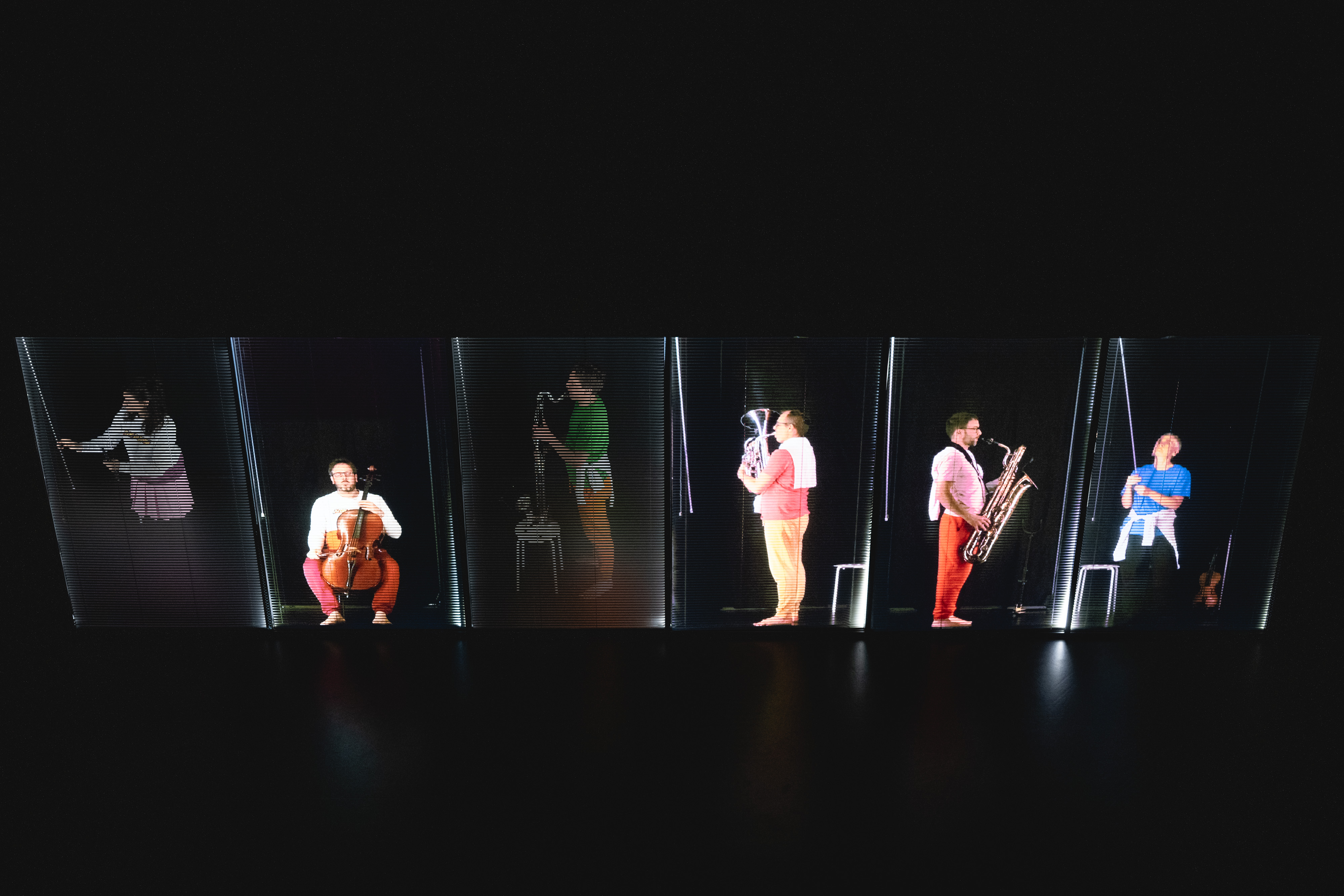
The performance brings together music, film, electronics, animation, and performance. I’ve been fascinated by Alexander Khubeev’s Don’t Leave the Room since its first performances, but it is one of those projects that is difficult to explain without seeing it.

The central performer, Elena Evstratova, uses sign language and gesture rather than spoken text. Her movements are precisely coordinated with the musicians, electronics, and video. At times the ensemble responds to her; at others, the relationship becomes almost mechanical. Her projected image eventually splits into several versions of herself.

For me, this is one of the things Nadar does particularly well: the technology doesn’t sit on top of the music. It changes the relationships between the people on stage.

So this is how the new semester starts for me: welcoming students back to the HfMT, preparing my Antrittskonzert, and then getting back on the road with Nadar.

If you’re in Cologne, I’d be very happy to see you at the concert on October 6. And if you’re in Münster, come and join us for Don’t Leave the Room on October 8. I hope to see some of you there!

A Week of Premieres, Plants, and Looking Ahead

The end of the academic year always seems to gather momentum. Suddenly, projects that have been months in the making all converge into a few remarkable weeks. This past week has been one of those.

At HfMT Köln’s Adventure #16, I had the pleasure of taking part in the premiere of Christian Brandenberger’s Lieblingslied. For me, it was also a rather personal milestone: the first time I had played the contrabass trombone in around fifteen years. Thankfully, it felt surprisingly natural to return to the instrument. More importantly, Lieblingslied proved to be an intensely moving work—subtle, powerful, and beautifully crafted. As always, sharing the stage with the incredible musicians of Ensemble Musikfabrik was both inspiring and a reminder of the extraordinary level of musicianship they bring to every project.

A few days later I found myself at the Nadar Summer Academy, where, amongst many fascinating workshops and performances, I coached participants in John Cage’s Branches. Every time I return to this piece I become more convinced of its continuing relevance—perhaps even more so now, as the boundary between what we consider “natural” and what we have imposed upon it becomes increasingly blurred. Cage invites us to make music not about nature, but with it. This time, however, I asked participants not only to work with branches and leaves, but also to collect non-organic materials—plastic bottles, caps, wrappers—objects that have become just as present in our environment as any plant or tree. Once you’ve accepted that our actions inevitably shape the world around us, listening carefully to these materials becomes something more unsettling. The sounds of plastic and debris are no longer incidental; they are part of the landscape we have created. What emerges is not only an exploration of timbre, but a confrontation with the traces we leave behind. Watching participants navigate this expanded sonic field—and hearing the resulting performance—was a reminder that Cage’s work continues to resonate, perhaps now with an added layer of urgency that is difficult to ignore.

Tonight marks another milestone: the premiere of Udo Zimmermann’s Die Weiße Rose with our students in Aachen. It has been an immensely rewarding process to accompany this production from its first rehearsals to opening night. The dedication of everyone involved—musicians, singers, production team, and staff—has been remarkable. I wish them all a wonderful premiere and an unforgettable performance.

The week concludes on Sunday at Museum Insel Hombroich with Prof. Ulrich Flad’s incredilble HfMT Köln trombone class . We will revisit two works that we first explored together back in January: Georg Friedrich Haas’ astonishingly detailed micro- (perhaps even nano-) tonal writing and Folke Rabe’s wonderfully untamed Bolos. I will also have the chance to perform George Lewis’ Oraculum once again—a piece that continues to challenge and surprise me every time I return to it.

It feels like a fitting way to bring this season almost to a close. Almost, because there is still one more concert to come on 1 August in Antwerp before it’s time to take a breath and begin looking towards the many exciting projects waiting next season.

More about that very soon.

From Athens to Aachen

On 20 and 21 June I’ll be back in Athens with my fellow Nadar Ensemble players for two more performances of Michael Beil’s Hide to Show.

This piece has really grown within the ensemble over the course of the season. The more we play it, the more natural it feels and the more there is to discover in it. It’s been exciting to watch it develop from one performance to the next, and we’re all very happy to be bringing it to Athens.

On 1 June I had the pleasure of joining Musikfabrik for a concert at the Morgenland Festival in Osnabrück.

I always have a great time with this ensemble. The musicians are unbelievably good, but they’re also just such nice people. There’s a real sense of curiosity and generosity in the group that makes rehearsals and concerts a pleasure. Spending a few days with them in Osnabrück was a real highlight.

In Aachen, we’re entering the final rehearsal phase for Udo Zimmermann’s chamber opera Die Weiße Rose, which will be performed on 15 and 17 July at the Klangbrücke.

The project is a collaboration between soprano Valerie Haunz and the student new music ensemble Aix•tent. For Valerie, it serves as her Master’s Abschlusskonzert. For the ensemble, it’s a chance to go much deeper into music theater than we normally do and to explore the space where music, text, staging, and dramatic expression all meet.

Valerie has been an amazing project leader throughout the entire process. Not only has she come to the project exceptionally well prepared as a singer, but she has also kept an eye on the countless practical details that go into making a production like this happen. It’s rare to find someone who can balance both sides of the job so well. Bravo, Valerie!

Quebec Tour & a Sold-Out Night in Ghent

The last weeks have been full.

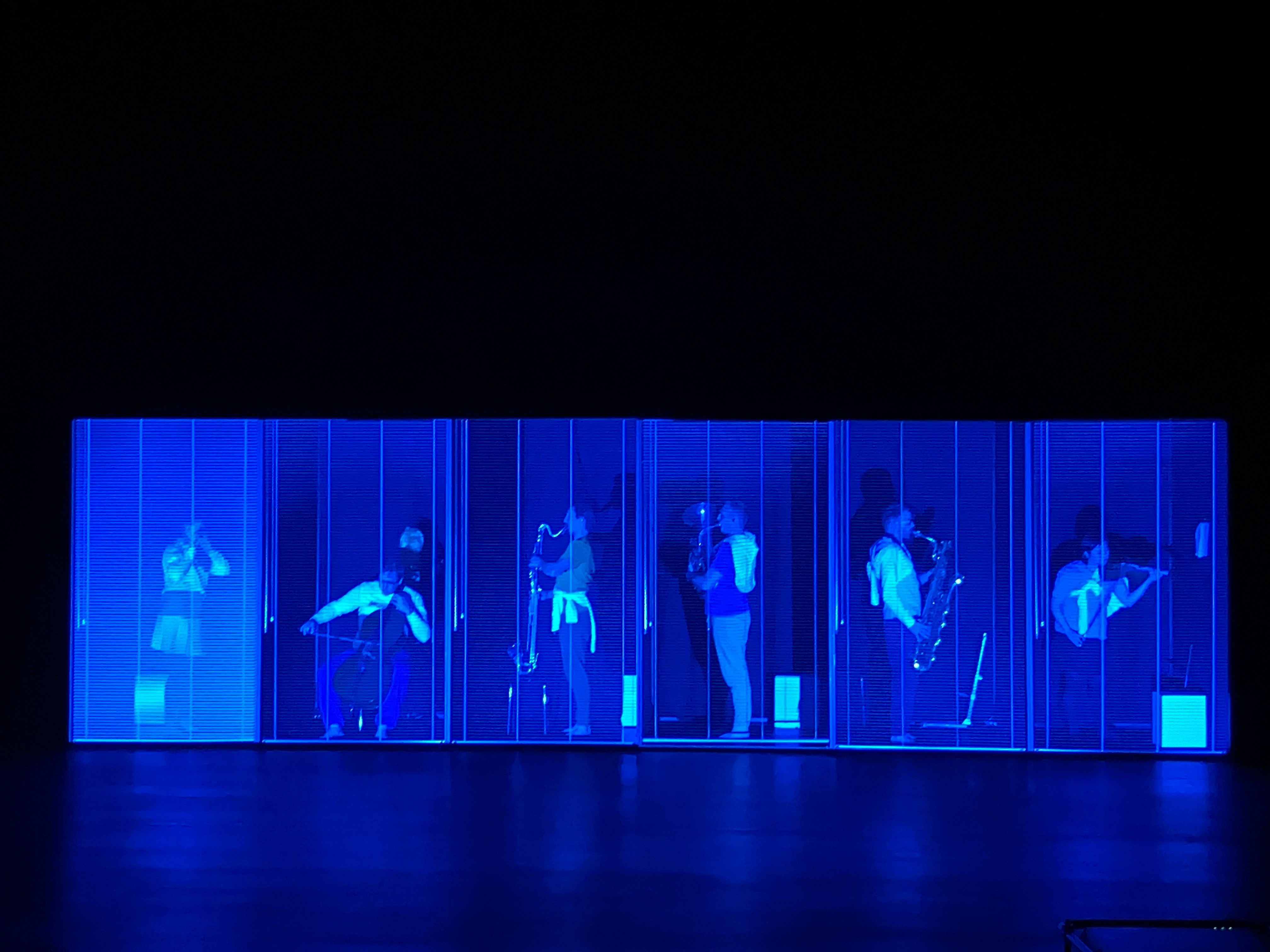
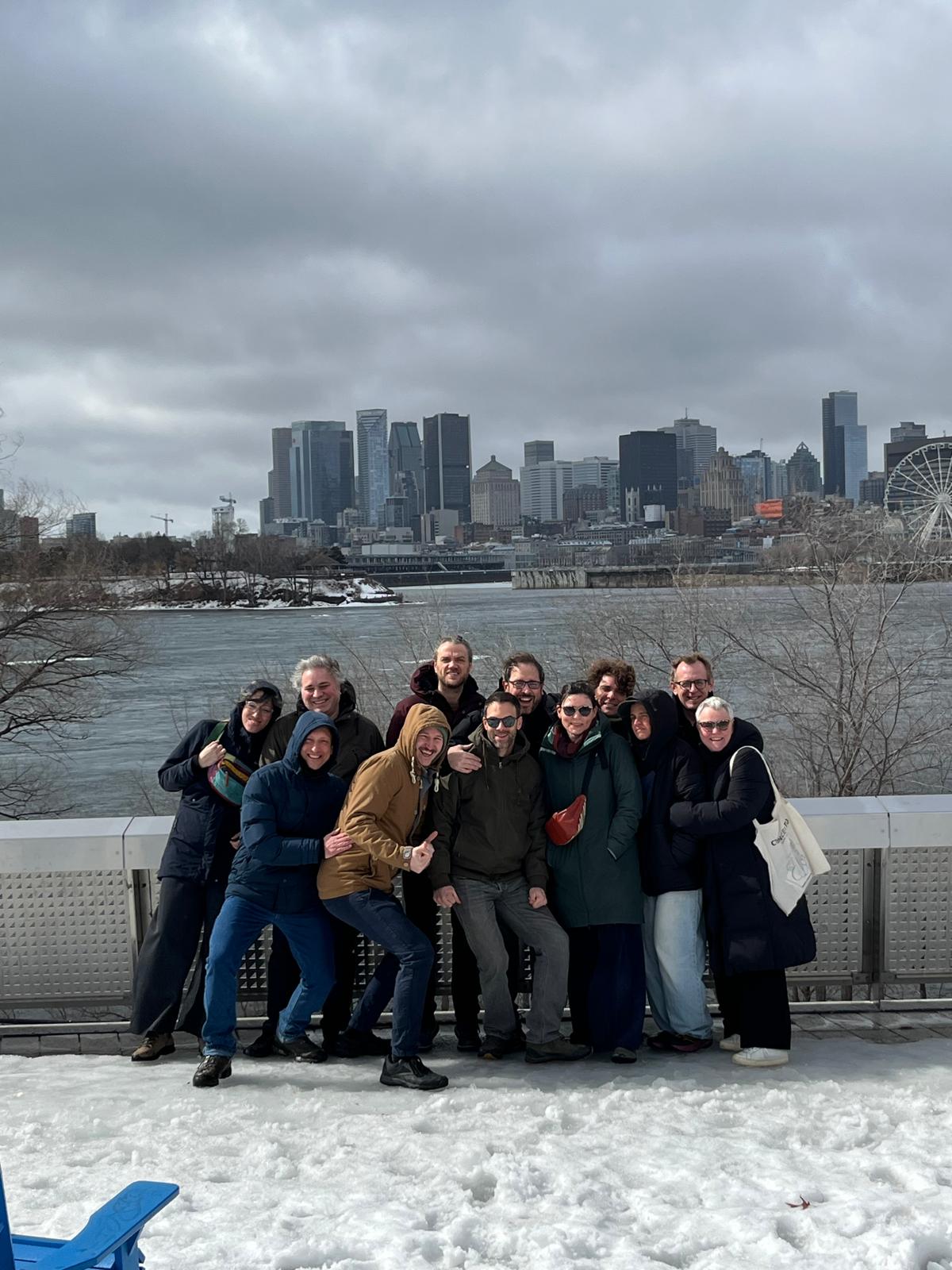
At the beginning of March we had a wonderful tour through the province of Quebec in Canada with Michael Beil’s scenic composition Hide to Show. The piece is a wild, virtuosic exploration of digital culture, where live music, video and staged action constantly blur the line between what is real and what is mediated.

We played four performances with truly fantastic audiences:

  • 3 March — Québec City
  • 5 March — Chicoutimi
  • 7 March — Montréal (two shows)

Each concert had its own atmosphere, but everywhere we were met with incredible enthusiasm and curiosity. Touring a large-scale work like Hide to Show is always an adventure, and it was a real joy to share this piece with audiences across Quebec.

A huge thanks to everyone involved in organizing such a memorable tour.

Back in Belgium, we moved almost directly into our next project: a sold-out performance of Don’t Leave the Room at Muziekcentrum De Bijloke in Ghent on 12 March.

The program brought together three remarkable composers:

  • Galina Ustvolskaya
  • Alexander Khubeev
  • Golnaz Shariatzadeh

The concert revolves around themes of silence, censorship and isolation, drawing inspiration from a poem by Joseph Brodsky that gives the program its title.

It feels particularly meaningful to perform this music in times like these. Two of the composers come from Russia and one from Iran — all contexts where artistic freedom and personal movement can be deeply restricted and politically dangerous. Their works remind us how artistic imagination can become a space of resistance, reflection, and sometimes simply survival.

Performing this program with a full hall in Ghent was both intense and deeply rewarding.

Nadar Ensemble releases Hermetika IX – Vox Angeli II & Goes on Tour to Quebec with Hide to Show

Image

We’re very happy to share the release of Hermetika IX – Vox Angeli II, a new work written for Nadar Ensemble by Bernhard Lang.

Lang’s Hermetika cycle is known for its layered structures and intricate repetitions. In Vox Angeli II, voice, electronics and ensemble are tightly interwoven, creating a sound world that is both precise and intense. Working on a piece conceived specifically for our ensemble was a special process — one that allowed us to shape the music in close dialogue with the composer.

Hermetika IX – Vox Angeli II was commissioned by Concertgebouw Brugge and Nadar Ensemble.
Program notes are written by Melissa Portaels.

The album was recorded in February 2025 at Studio 3 of DE SINGEL, Antwerp, and is released on Kairos.

You can find the recording here:
https://kairos-music.com/products/recording/0022067kai

Ensemble & team

Mar Berendsen, violin
Nico Couck, electric guitar
Katrien Gaelens, flutes
Yves Goemaere, percussion
Wannes Gonnissen, editor, recording engineer, mixer
Robin Goossens, business manager
Jasmijn Lootens, cello
Pieter Matthynssens, artistic director, electronics, conductor
Elisa Medinilla, keyboard
Els Mondelaers, mezzo-soprano
Thomas Moore, trombone
Stefan Prins, artistic director
Dries Tack, clarinets
Veerle Vervoort, production manager

Nadar Ensemble is funded by the Flemish Government.


Nadar tours Quebec with Hide to Show

Image
Image

In March, Nadar travels to Canada with Hide to Show, a scenic composition by Michael Beil.

Hide to Show plays with the relationship between live performance and video, constantly shifting perspectives and expectations. It is a piece that feels strikingly relevant in the way it reflects on visibility, framing and performance itself.

If you’re nearby, we’d be delighted to see you at one of the performances:

Tour Dates

3 March — Québec
LANTISS

5 March — Chicoutimi
CEM, 37 Rhainds, Chicoutimi

7 March — Montréal (2 shows)
Édifice Wilder
1435 rue De Bleury, Montréal

We’re looking forward to bringing Hide to Show to Canadian audiences and to sharing our new recording of Hermetika IX – Vox Angeli II with you.

Good News from Sint-Niklaas, Kraków, and Cologne


Last weekend brought some genuinely heartening news: Nadar Ensemble has been appointed cultural ambassador for the city of Sint-Niklaas for the next two years. It’s a real honor, and one that feels especially meaningful given how closely the ensemble’s story has become intertwined with the city. This recognition is, above all, a testament to the vision and tireless work of our artistic director, Pieter Matthynssens, and to the consistent presence Nadar has built in Sint-Niklaas over many years. I’m deeply grateful to be part of an ensemble whose work is valued in this way.


Almost at the same time, I was pleasantly surprised to come across a thoughtful and generous review of my concert in Kraków last December. The author rightly pointed out that while the audience was small, it was wonderfully engaged and enthusiastic—something performers feel immediately on stage. Even more gratifying were her reflections on the repertoire and the performance itself. It’s always encouraging to see careful listening and sincere engagement reflected back in words. Thank you Karolina Dąbek and Ruch Muzyczny.

Right now, my focus is firmly on Cologne, where I’m working with Prof. Ulrich Flad’s outstanding trombone class at the HfMT Köln. We’re in the midst of preparing a concert devoted entirely to contemporary music for trombone octet, quartet, and solo. The students are working with remarkable intensity and curiosity, and the atmosphere in rehearsals has been both demanding and inspiring. I’m very much looking forward to sharing the results.

Concert details:
📍 Ventanasaal, Cologne
🗓 22 February 2026
🕢 19:30

Music by: Joan Tower, Farzan Salsabili (world premiere), Pierre Jodlowski, Georg Friedrich Haas, Folk Rabe, and Judit Varga.

.

From Kraków to the New Year


Concert in Kraków

This week I was in Kraków for a concert that felt like both a culmination and a beginning. The evening marked the official premiere of Piotr Peszat’s And I am standing on stage again — a piece that continues to resonate with me each time I think back on it. Bringing it to life in Kraków, and in the Cricoteka – a museum dedicated to Kantor’s life and work, felt especially meaningful.

It was also a pleasure to perform Thierry De Mey’s Light Music again. Paired together, the two works seemed to speak to one another in unexpected ways. Both reflect on what it means to be a live performer today — responding, cooperating, and sometimes negotiating in real time with a machine. Experiencing that dialogue from the inside, on stage, remains both demanding and deeply rewarding.

(Photos from the concert below. Credits to Mart Grzesiek)


Starting the New Year in Cologne

The first project of the new year brings me back to HfMT Köln, working with the trombone class as part of the Oktett-Reihe. The program brings together a fantastic range of music, including works by Joan Tower, Julia Varga, and Georg Friedrich Haas, alongside a new student piece by Farzan Salsabili.

We’ll present the program on 22 January in the Ventanasaal in Cologne — a strong way to begin the year, and one I’m very much looking forward to.


More soon — but first, a little rest.

From Cantatas to Cricoteka

29 November – Concert in Sint-Niklaas

This weekend, I had the pleasure of performing with the Nadar Ensemble in our home town of Sint-Niklaas. And yes, you read that correctly: me playing Bach?
Well… sort of.

For me, a highlight of the evening was performing Simon Steen-Andersen’s fascinating re-staging of Bach’s Ich habe genug. It’s a brilliant, intricate, and surprising piece — always a challenge.

We also premiered Anthony Romaniuk’s new work, Enough (Already), composed especially for us and for this program, fittingly titled “I’ll be Bach.”

The concert featured wonderful solo performances by my colleagues Pieter Matthynssens, Nico Couck, and Anthony Romaniuk. Bravo!


Trombone Octet – Reading Farzan Salsabili’s New Piece

A few days earlier, on 26 November, the trombone class at the HfMT Köln gathered to read through a brand new piece by Farzan Salsabili, a student of Brigitta Munte­ndorf and Oxana Omelchuk.

Written specifically for this ensemble as part of the Oktett-Reihe project, the piece dives deep into the possibilities of the trombone — full of inventive techniques, written for the instrument in a way that feels natural, idiomatic, and exciting. It was a joy to explore this new work for the first time.


Next Concert – 17 December in Kraków (PL)

The next stop is Kraków, on 17 December at 19:00 in the Cricoteka. I’m both excited and a little daunted: performing two demanding solo works in one evening is always a real challenge.

The program features:

  • Thierry De Mey – Light Music
  • Piotr Peszat – And I am standing on stage again (world premiere)

Peszat’s new piece, inspired by the work of the renowned Polish artist Tadeusz Kantor and his Theatre of Death, reimagines the trombone concerto format. It dives into the mechanisms of human memory, weaving references to Kantor’s world into a vivid musical language.

It’s a true honour to be able to premiere this work in the Cricoteka, the museum dedicated to Kantor’s life and art.


Concerts, Collaborations, and What’s Coming Up


Portrait of George Lewis – 27.10, Hochschule für Musik und Tanz Köln

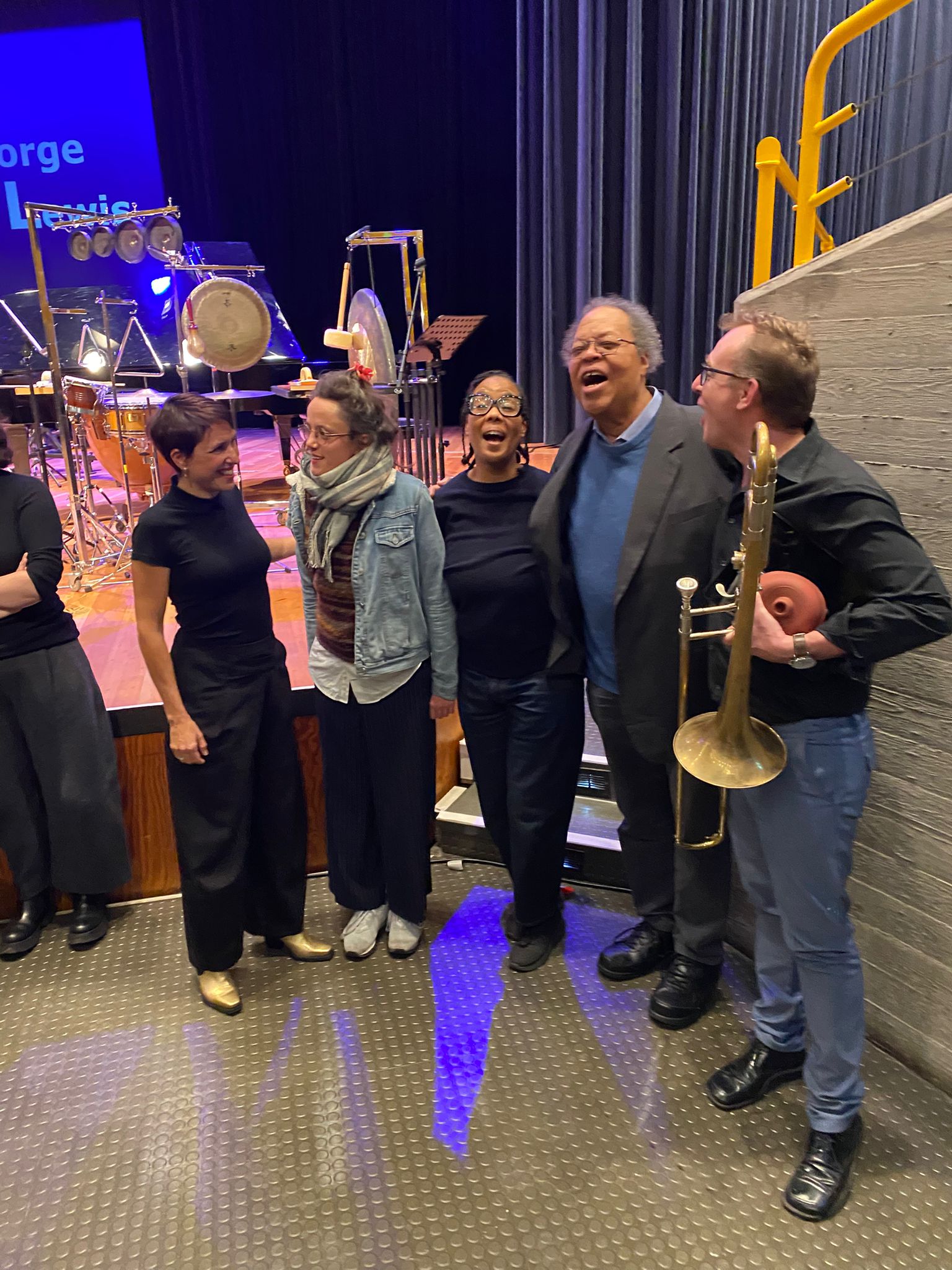
On a concert put on by ColLAB Cologne, I was asked to play George Lewis’s Oraculum for solo trombone. It’s a powerful piece and I learned a lot about my own instrument through it. Performing as a professor for many of my new colleagues (and a full house!) added another layer to the experience. Hearing the piece live in that space, made every gesture more real – it’s a great piece and it needs an audience.

The concert was part of the festival Composing While Black and Queer, organized by my colleagues Anna Schürmer and Susanne Blumenthal. I was happy to have been a part of a festival that centers these voices.

Concert with MAM – 9.11, Dortmund
A few weeks later, I was in Dortmund with MAM, working again with Michael Maierhof. We played a new piece that takes his sound ideas further into the realm of light. It was great to play with new people in the ensemble and to perform in the unusual space of Tresor.West. It’s exciting when a piece feels like it’s evolving in real time, and this one definitely did.

Coming Up

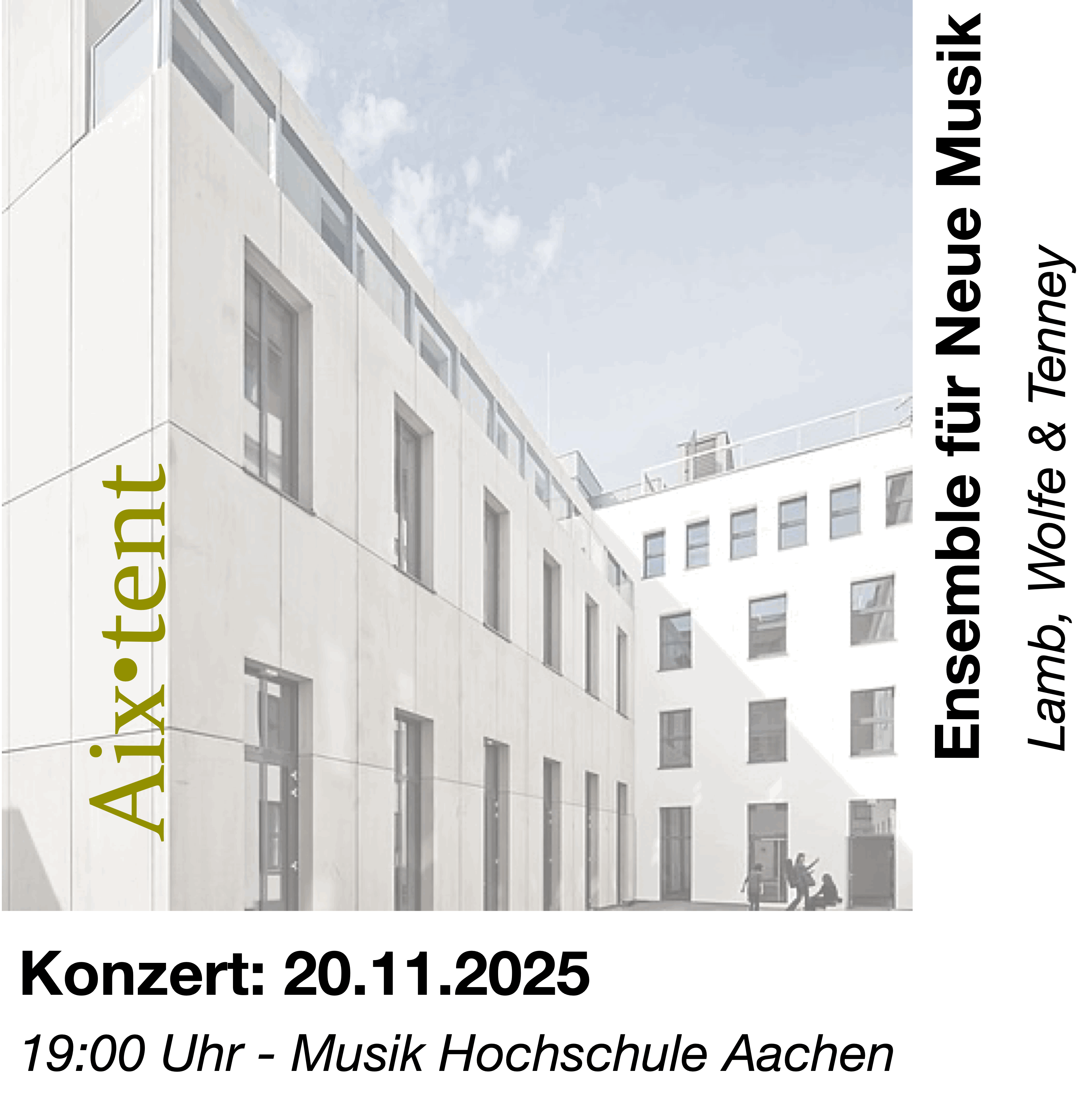
Aix•tent Concert – 20.11, Aachen
My student ensemble in Aachen have been preparing a noisy, post-spectral program and been working hard on new techniques. We also had a masterclass with Wolfgang Bender, former violinist with the Kairos Quartet. The program includes music by Catherine Lamb, Julia Wolfe, and James Tenney. The students’ curiosity and energy is very rewarding.

Brigitte Kempen Wettbewerb – 21 & 22.11
I’ll be on the jury for the Brigitte Kempen Wettbewerb, this time for violins. Two days of competition. It’s interesting to participate as an outside perspective — not a string player myself — and I’m looking forward to hearing the different interpretations from the players and being on the other side, just listening and observing.


Memorable Finale at Transit Leuven + What’s Next

This past weekend, we closed out our fall tour with Nadar Ensemble at Transit Festival in Leuven — and what a perfect way to wrap things up! Leuven always feels like home: it’s full of memories and friendly faces, and the food at STUK never disappoints. Performing there feels like a reunion, and the buzzing festival crowd adds that extra spark of energy.

Playing with Nadar is always a joy. The musicians are exceptional, and the creative rapport we’ve built over time makes every project feel fresh and exciting. I’m proud of how we keep pushing boundaries and collaborating on meaningful works together.

The program we brought was the Nadar Summer School’s What’s Next project. This year’s four composers — Eveline Vervliet (Belgium), Paul Scully (Ireland), Nina Fukuoka (Poland/Japan), and Matthew Grouse (UK) — each brought a truly distinct voice:

  • Eveline Vervliet – The silence that sounds in its absence
  • Paul Scully – Personal Best
  • Nina Fukuoka – Yuggoth
  • Matthew Grouse – To put words in my mouth

Hearing and realizing these pieces with the ensemble gives me hope about the next generation of composers. They challenged us, inspired us — and reminded me why we keep doing this.

(Photos from the performance are included — all are by Evy Ottermans.)


It was a particular joy that MATRIX [New Music Centre] celebrated their 25th anniversary during Transit this year — a milestone for an institution that has nurtured so many voices in new music in Leuven and beyond. I would be remiss if I also did not highlight the amazing socks they distributed as part of the celebration. They are bold and perfect as an unforgettable emblem of MATRIX’s creative spirit — a fun little touch that made the 25th birthday even more memorable.


Looking Ahead: October 27 in Köln

Up next: October 27, I’ll be performing at the Hochschule für Musik und Tanz Köln, in their main concert hall, as part of their portrait concert for George Lewis. My piece will be Oraculum (solo trombone) — the first time I’ll present anything by Lewis, and the first time I’ll play trombone at HfMT in my role as professor there.

This concert is part of the Composing While Black & Queer symposium held at the school. Over three days (27-29 October, 2025), the symposium explores questions of identity, representation, and new directions in contemporary music.

I’m deeply enjoying working on Oraculum. It feels both challenging and rewarding, and presenting it in this context feels meaningful. Doing so in the same institution where I teach — on a program centered on inclusion, visibility, and expanding musical narratives — gives the concert extra weight for me personally.