There is always something slightly strange about the first week of a new semester. The corridors at the HfMT suddenly fill up again, people appear carrying instruments and coffee, rooms that have been empty for weeks are booked solid, and everyone is trying to remember where they left off before the summer.
This year, for me, the beginning of the semester feels particularly significant.
The winter semester at the Hochschule für Musik und Tanz Köln starts on October 5. The following evening, on October 6, I will play my Antrittskonzert as Junior Professor for Interpretation of New Music. And less than 48 hours later, I’ll be in Münster with Nadar Ensemble for Don’t Leave the Room.
So there isn’t exactly going to be a gentle return to work.
One of the things I enjoy most about working at the HfMT is that the teaching is never really separate from the artistic work. The questions that come up in rehearsals—how we work with electronics and video, how performers take on different roles, and how we rehearse music that doesn’t behave like traditional repertoire—also find their way into the classroom.
And before all of that gets properly underway, there is the small matter of standing on stage myself.
(c) Pieter Matthynssens
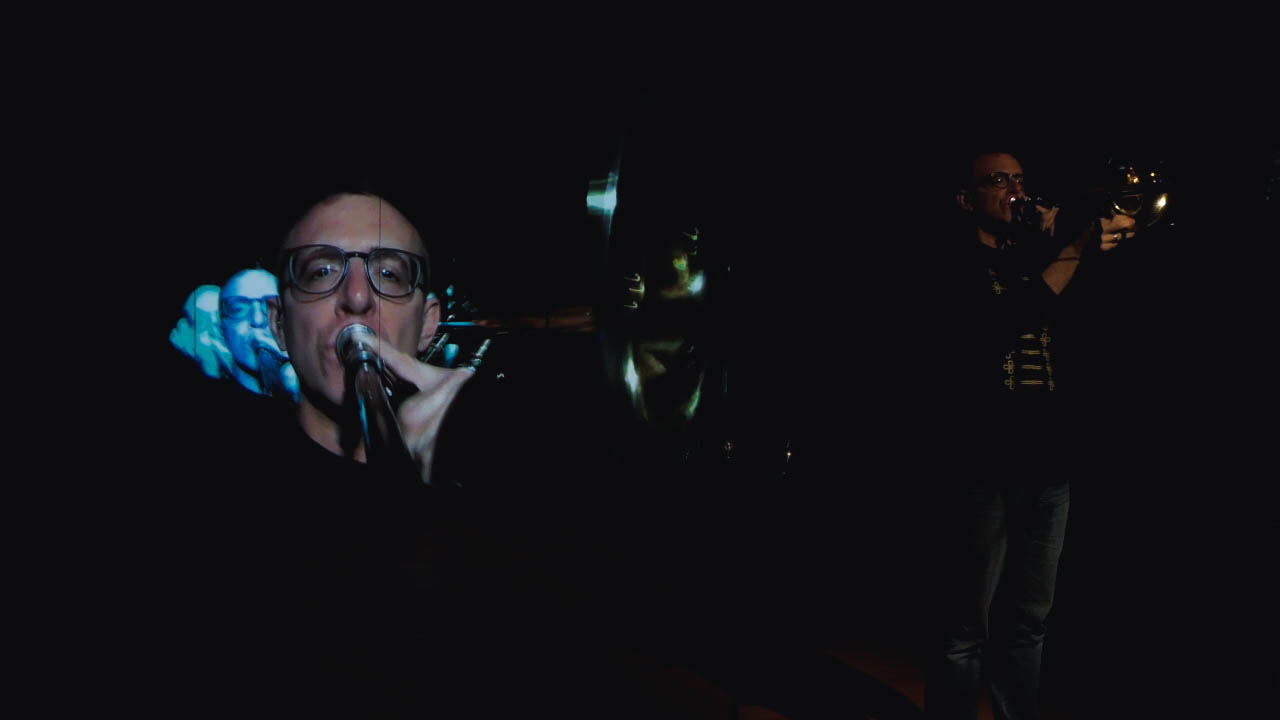
And I am on stage again
My Antrittskonzert is part of the HfMT’s Spitzentöne series. The program brings together Jessie Marino’s Ritual, Piotr Peszat’s And I am standing on stage again, and Thierry De Mey’s Light Music.
It is not exactly a conventional trombone recital.
In Peszat’s piece, for example, I work with live video and electronics alongside the trombone. Wannes Gonnissen is responsible for the sound, and Piotr is involved with the electronics. The technology isn’t decoration around the music—it is part of the performance itself.
That is also a good description of much of the work I want to develop at the HfMT: not just asking how we perform contemporary music, but what a performer can be when the traditional boundaries between instrument, musician, and concert start to become less clear.
And perhaps appropriately for an Antrittskonzert, the title And I am standing on stage again feels slightly autobiographical. After all the rehearsals, meetings, teaching, administration, and emails that come with starting a new job, there is something wonderfully straightforward about eventually just having to walk onto the stage and play.
(c) Wim Hierbaut
Then we leave the room
The following Thursday, I will be doing almost the opposite.
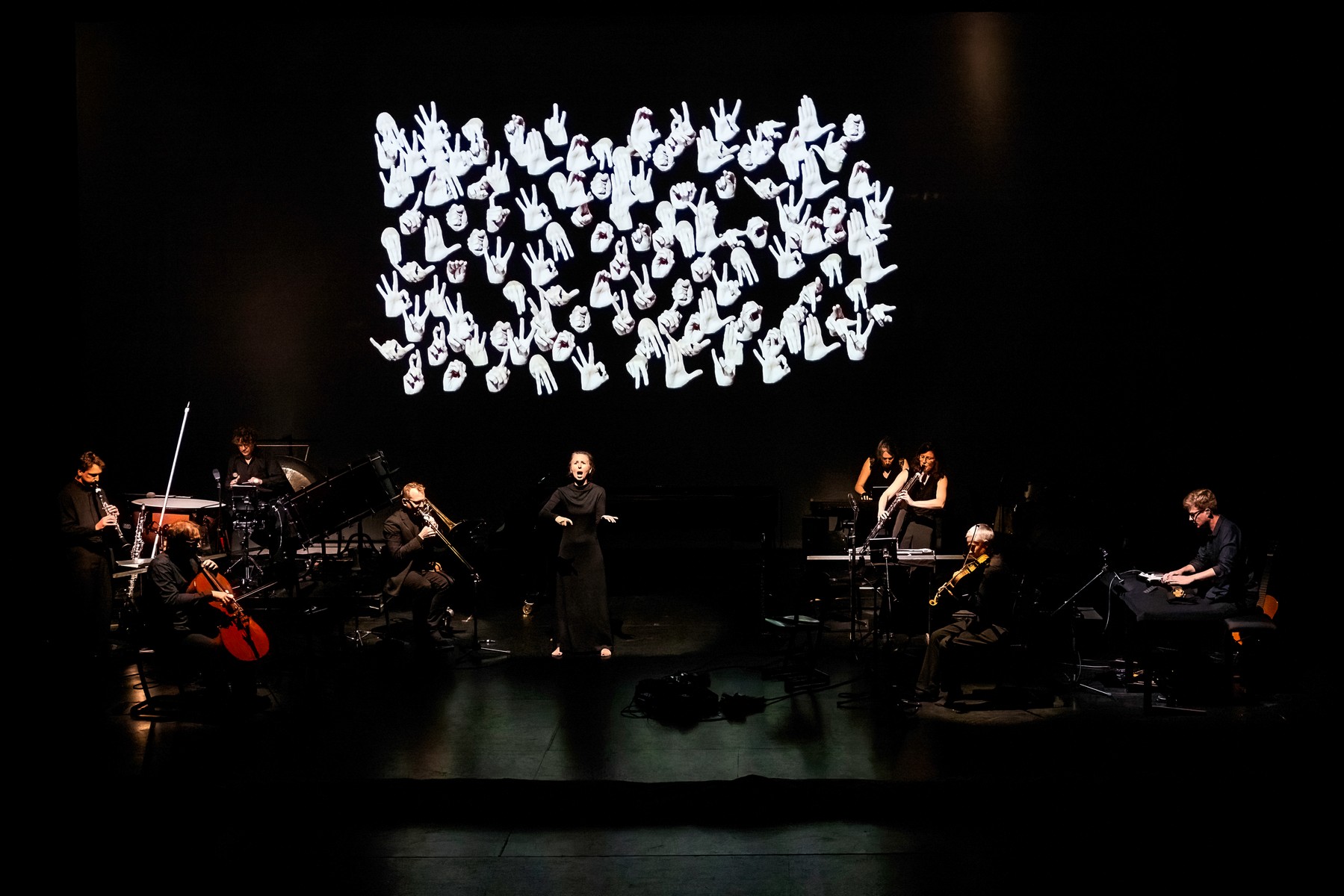
With Nadar Ensemble, we are performing Don’t Leave the Room at Theater im Pumpenhaus in Münster. It is the German premiere of the production.
The starting point is Joseph Brodsky’s poem Don’t Leave the Room, written in 1969—a partly ironic, partly threatening invitation to stay inside, shut the door, and avoid the outside world.
The performance brings together music, film, electronics, animation, and performance. I’ve been fascinated by Alexander Khubeev’s Don’t Leave the Room since its first performances, but it is one of those projects that is difficult to explain without seeing it.
The central performer, Elena Evstratova, uses sign language and gesture rather than spoken text. Her movements are precisely coordinated with the musicians, electronics, and video. At times the ensemble responds to her; at others, the relationship becomes almost mechanical. Her projected image eventually splits into several versions of herself.
For me, this is one of the things Nadar does particularly well: the technology doesn’t sit on top of the music. It changes the relationships between the people on stage.
So this is how the new semester starts for me: welcoming students back to the HfMT, preparing my Antrittskonzert, and then getting back on the road with Nadar.
If you’re in Cologne, I’d be very happy to see you at the concert on October 6. And if you’re in Münster, come and join us for Don’t Leave the Room on October 8. I hope to see some of you there!

